
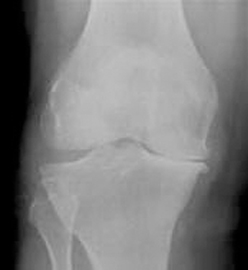
Exercise and Osteoarthritis
Osteoarthritis is a painful condition in the joints of the hands, knees, hips and spine. It affects millions of people throughout the world and is caused when the cartilage that cushions the joints wears down. There is no cure for this condition but there are some things you can do to strengthen your muscles around the joints. In turn, you may feel better overall.
It is important to consult your doctor before starting any exercise program. Your physician may have specific instructions for you to follow. These guidelines are important for helping to keep you safe. There are many different exercise programs that are safe for individuals with Osteoarthritis.
Locating a gym and setting goals
When looking for a gym choose one close to home, as it will be easier to go on a regular basis. You should also think about when you would like to workout. Individuals with arthritis usually feel better in the afternoon. Getting to the gym in the morning may be harder.
 Water exercise
Water exercise is easy on the joints and may help with pain. Being in the pool will take weight off of your joints and make movement easier. When exercising in the water you can either have a trainer, take a class, or work on your own. If you choose to work on your own having an initial assessment and a training session is beneficial. Initial assessments and training sessions are usually included in a membership. You should also ask which classes would be suitable for you.
Land Exercise
Individuals can benefit from land exercise as well. Some gyms have land arthritis classes or light classes. Again, having an assessment can help you to figure out which classes are right for you. Like water exercise you can choose to take a class, work on your own, or hire a trainer. Either way, talk to the fitness staff and ask for guidance. On land, warm up is important. Try to do a 10 to 15 minute warm up on a recumbent bike. It will be easier for you to move after a proper warm up. It is also important not to run, jump, or lift too heavy.
Mind/Body Exercise
Mind/Body exercise is a nice compliment to any workout. It usually incorporates a balance and stress management component. There are many classes to choose from such as Yoga, Pilates, and Tai Chi. Most gyms today, have many variations of these classes. For instance, Gentle Yoga, and Chair Yoga are popular among individuals with arthritis. When searching for a gym ask what types of classes are offered.
Robyn Caruso is the Founder of The Stress Management Institute for Health and Fitness Professionals. She has 15 years of experience in medical based fitness.
Source: http://www.mayoclinic.org/diseases-conditions/arthritis/in-depth/arthritis/art-20047971?pg=1
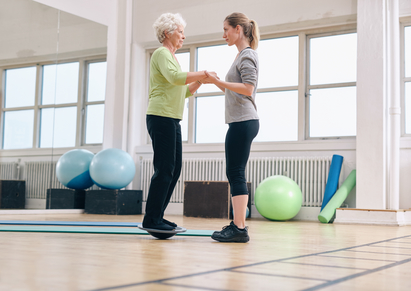
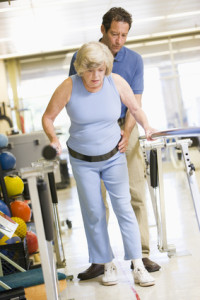 Balance Training
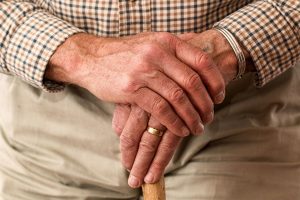 As of late, more and more headlines suggest a clear and concise connection between “the elderly” and death. Aging and death are not synonyms. Yes, both happen to us, although not always in a logical and linear order. Just yesterday morning, I sat in the back tea room of our home, opened the New York Times newspaper as I do most mornings and discovered a special edition on “the elderly in Japan.” Here is an 8-page layout on living conditions in public housing communities that sprawl across Japan. Once vital centers of communities, lively in the 1960s, people describe them now as hosting magots, mounds of piling garbage, and incense burning in the smell of urine and bodies decomposing. Grand. Just what I want to become. Elderly. Really? Well, if this is how elderhood is described, why would anyone opt for this. One man interviewed in the story shared his sentiments: “How we die is a mirror of how we live.” This is not an isolated thought, rather it runs deep in our individualistic society. This ideology is deeply entrenched in our understandings of aging.
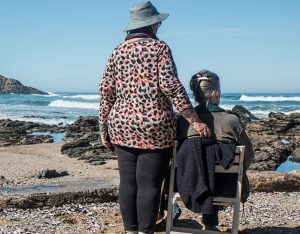 suggesting agreement, although I didn’t know precisely what she meant. And I still don’t. This was almost twenty years ago, when I was first starting out in the field of counseling and took a lot in, rather than ask any questions. And now, I inquire on people’s meaning of this any time such a remark is made. Sometimes, I’ll throw in the question, “If she’s in the process of dying, isn’t she also in the process of living?”
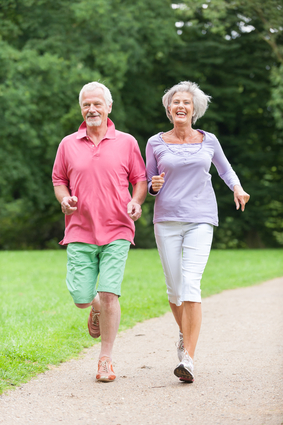 Nourish All Your Systems, Together: The whole body needs better nutrition but we don’t need different nutrition for better health nor for healthy aging. The good news is that key nutrients support the whole body’s total health. So when you consume probiotics, yes you are helping support a healthy digestive system but that also supports immune health which reduces overall stress and enables better heart health and brain health and so on. Same goes for a daily dose of broccoli’s glucoraphanin which enables detoxification, which removes unwanted toxins, which makes it easier for the body to do its daily tasks, which supports healthy skin, immune health and so on.
 The emotional journey of facing a diagnosis such as Alzheimer’s disease or dementia can be overwhelming for both the patient and their families. Feelings of fear, stress, anxiety and loss can overpower all individuals involved and the ability to have questions answered is essential to easing these emotions.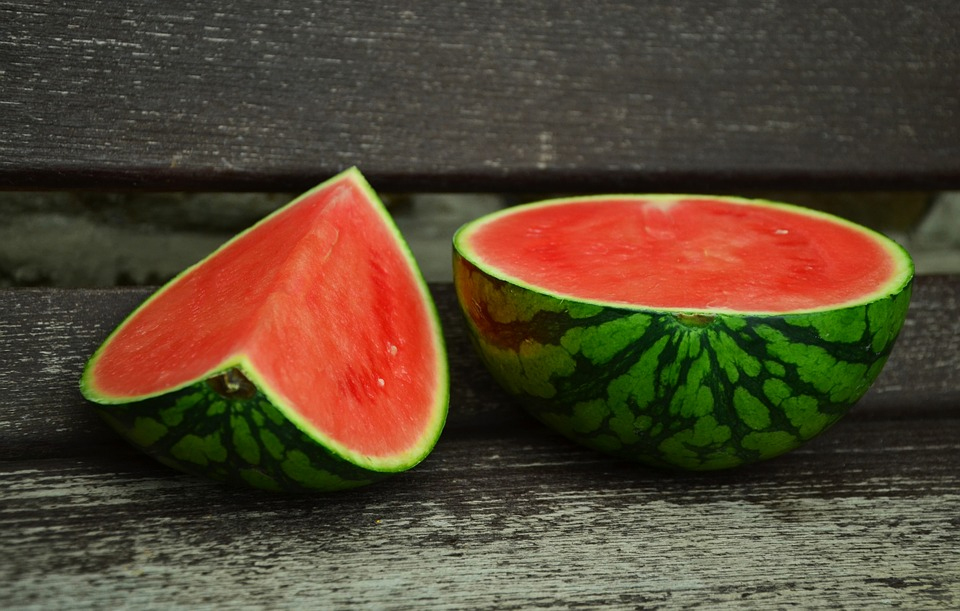
 You may have heard that blueberries are brain food. What makes blueberries so beneficial is that they are packed with polyphenols or compounds unique to plants. Polyphenols which can also be found in coffee, dark chocolate and spices carry some of the strongest anti-oxidant and anti-inflammatory properties.
 Watermelon is one of my favorite pre-workout drinks due to its effect on vasodilation and circulation! The vasodilation effect of watermelon is found in the amino acid L-Citruline which is a precursor to nitric oxide (think Viagra!).
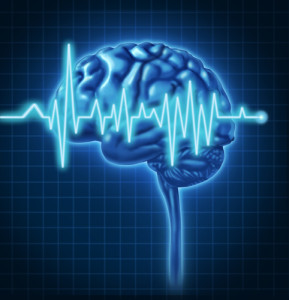 A stroke is caused by an interruption of the flow of blood to the brain or by a rupture of blood vessels in the brain. The damaging effects of a stroke depend on what parts of the brain are affected, as well as the amount of damage. Common after affects contribute to resulting weakness on the side contra lateral to the brain injury.
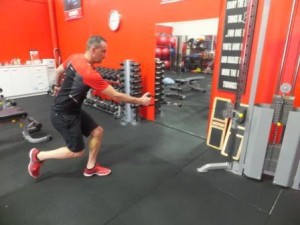 With the stroke or brain affected clients we had more success with starting with more complex and difficult tasks often completed in a split stance, using contralateral arm and leg movements. (See picture).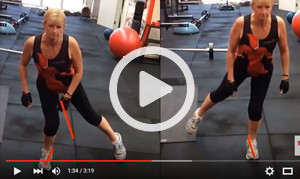
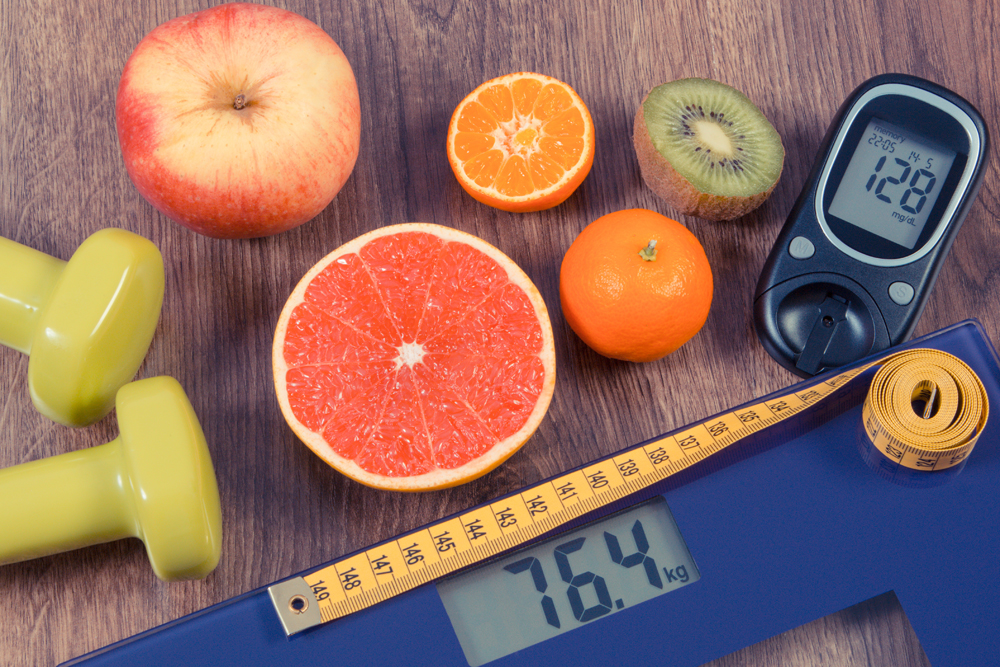
 Unfortunately, diabetes is becoming a common disease in the United States and elsewhere. Some of that is genetic since you are at a higher risk if your parents had the disease, but an unhealthy lifestyle can contribute to it as well.
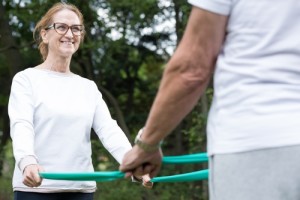 Exercising With A Home Gym
 If intestinal distress sidetracks you during exercise, try reducing your intake of apples, onion, garlic and broccoli —particularly for 2 to 3 days before a competitive event.These are just a few commonly eaten foods that are high in fermentable (gas-producing) carbohydrates; they might contribute to undesired pit stops. You could also meet with a sports dietitian to help you systematically discover triggering foods. The referral network at
  Sugar-sweetened beverages are the biggest source of dietary sugar in the US diet. Hence, research on sugar and health has focused on soft drinks. The question remains unanswered: Is sugar added to nourishing foods a health hazard? That is, is sugar added to spaghetti sauce (to make it less acidic) bad for you? What about the sugar added to bread (to help make the dough rise) — Is that a cause for concern?